
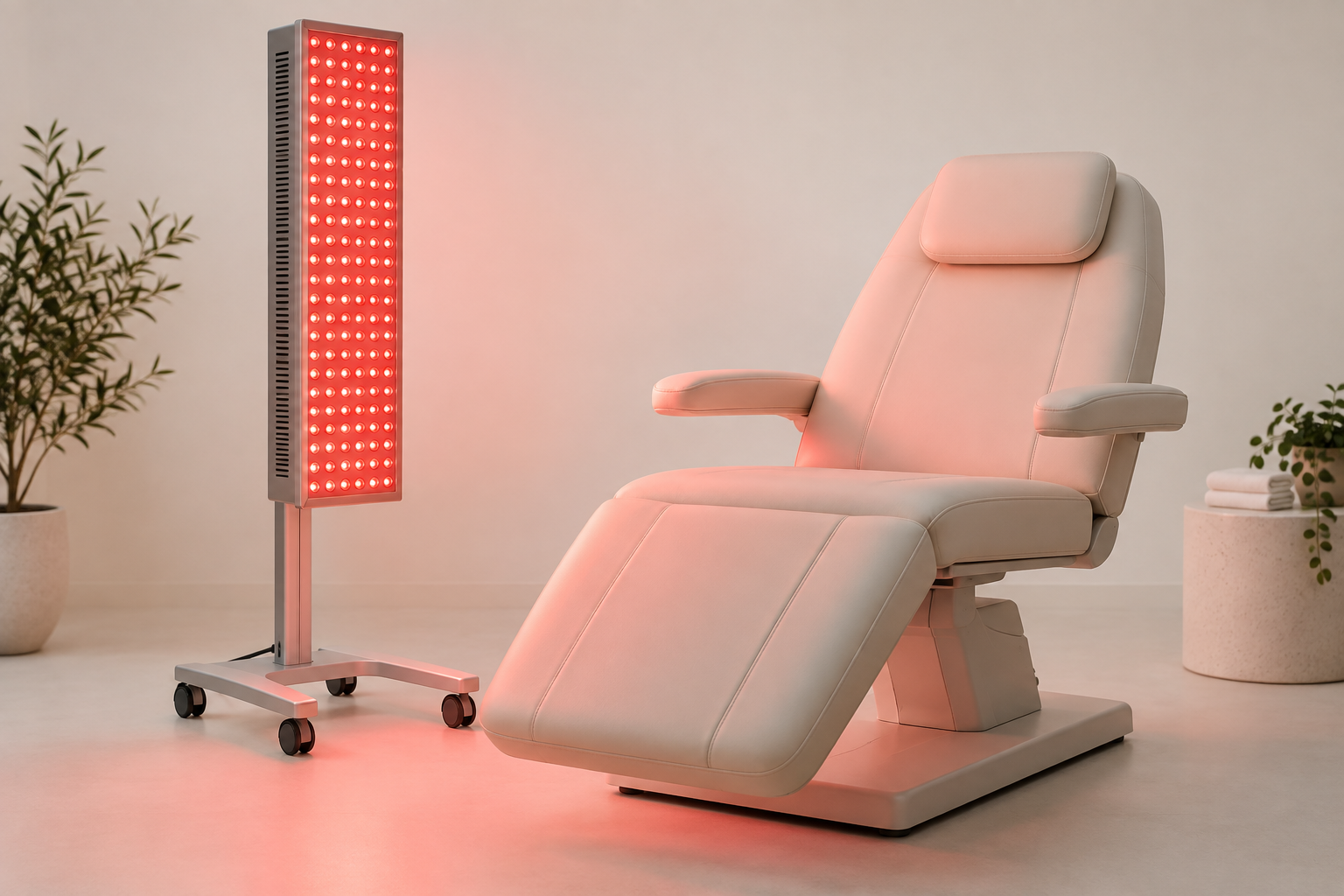
Red Light Therapy
Explore a Different Approach to Skin and Tissue Health
Red light therapy uses specific wavelengths of visible red or near-infrared light to influence cellular activity without an incision or injection. Also known as photobiomodulation, it may be considered for selected skin, hair, discomfort, and recovery goals depending on the device being used.
At Regenerative Health Institute in Fishers, the conversation begins with what you want to improve. Device type, wavelength, treatment area, medications, and health history all affect whether red light therapy is appropriate and what results are realistic.
Have questions about red light therapy?
Call (317) 548-1020 or request an appointment.
Conditions and Concerns Red Light Therapy May Address

Different red light devices have different intended uses. Depending on the equipment and your evaluation, red light therapy may be considered for:
- Fine lines, wrinkles, and signs of photoaging
- Overall skin tone, texture, and appearance
- Mild to moderate inflammatory acne with an appropriately cleared device
- Androgenetic or hereditary-pattern hair loss with a hair-growth device
- Temporary relief of minor muscle or joint discomfort
- Exercise recovery and muscle-performance goals
- Supporting tissue recovery as part of a broader care plan
No single device is intended for every concern. Results from a facial device, hair-growth cap, or larger treatment panel should not be treated as interchangeable, and red light therapy should not be presented as a cure for disease.
How Red Light Therapy Works
During treatment, an area of the body is exposed to red or near-infrared light for a defined period. Unlike ultraviolet light, these wavelengths do not tan the skin. Low-level light therapy is designed to deliver light without intentionally heating or damaging tissue.
Researchers continue to study how light influences mitochondria, circulation, inflammatory signaling, and tissue repair. The wavelength, power, distance from the device, session length, and treatment schedule all influence the dose received.
Potential Benefits
For an appropriate candidate using the right device for a defined goal, potential benefits may include:
- A non-invasive treatment with no needles or surgical incision
- Little or no downtime for many uses
- Support for smoother-looking skin and improved skin appearance
- Support for hair growth in certain patterns of hereditary hair loss
- Temporary relief of minor aches or stiffness with certain devices
- A comfortable option that may complement an existing wellness or recovery plan
- A treatment plan that can be tracked with photos, symptoms, or functional goals
Changes are usually gradual, and a series of sessions may be recommended. Outcomes vary, and maintenance treatment may be needed depending on the concern and device.
What to Expect at a Session
The treatment area is positioned at a specified distance from the light source, and the eyes are protected when required by the device instructions. Most sessions are straightforward, but treatment time and frequency vary.
Before starting, ask which device will be used, what it is cleared or intended to address, and how progress will be measured. A responsible plan should explain the potential advantages, the limitations, the expected schedule, and when to reassess.
Safety and Candidacy
Share your medications, supplements, skin conditions, eye conditions, pregnancy status, cancer history, and any history of sensitivity to light. Certain medications and medical conditions can increase photosensitivity. Temporary redness, irritation, headache, or discomfort may occur, and eye protection should be used when indicated.
Do not use red light therapy to delay evaluation of a changing mole, persistent rash, unexplained pain, or another concern that needs medical diagnosis.
Take the Next Step

Whether you are exploring skin support, hair-growth options, or another wellness goal, bring your questions to Regenerative Health Institute. Call (317) 548-1020 to discuss red light therapy in Fishers and whether it fits your needs.